Visual Schedules
General Information
Videos
Additional Links
General Information
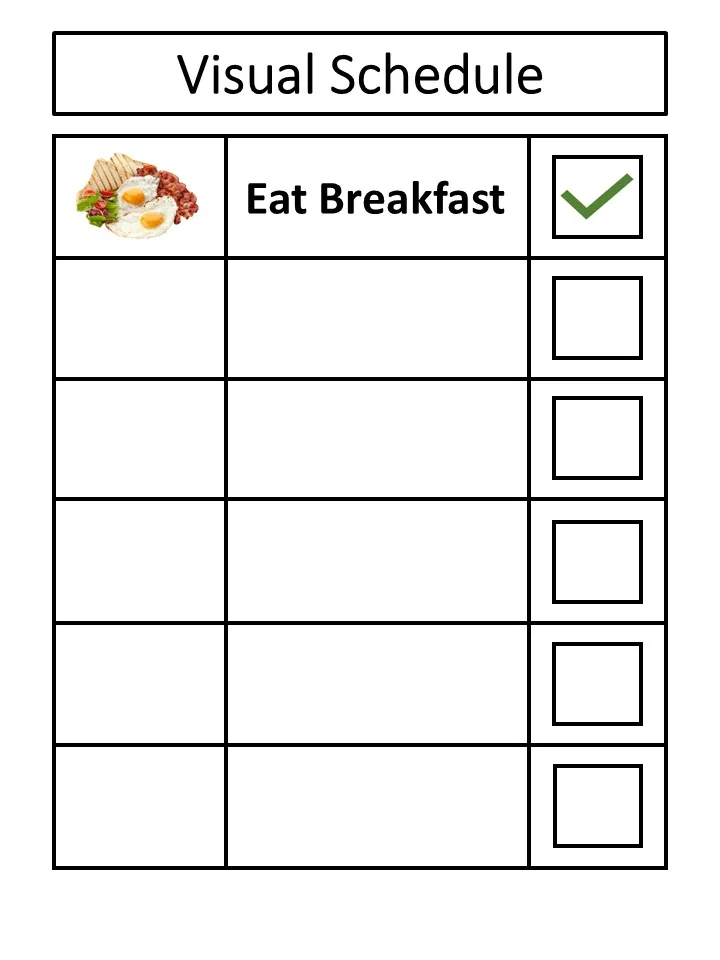
Visual schedules use images, words, or symbols to outline daily activities, routines, or tasks. They help people manage transitions, build independence, and understand what to expect throughout the day.
Types of Visual Schedules:
-
Low-Tech: Paper-based, laminated, Velcro, or magnetic boards; dry-erase schedules; First-Then boards; ASL-integrated charts.
-
Mid-Tech: Talking schedules with auditory cues; digital photo frames or tablets with static images; light-up or sound-based timers.
-
High-Tech: Mobile apps with customizable schedules; reminders through smart assistants; wearable or eye-tracking technology with adaptive schedules.
Examples of Use:
-
Morning, bedtime, or self-care step-by-step schedules.
-
Visual outlines of subjects, transitions, or group activities.
-
Task lists with words or images for job duties.
-
Family chore boards and shared routines.
-
Schedules with visual cues for errands, outings, or events.